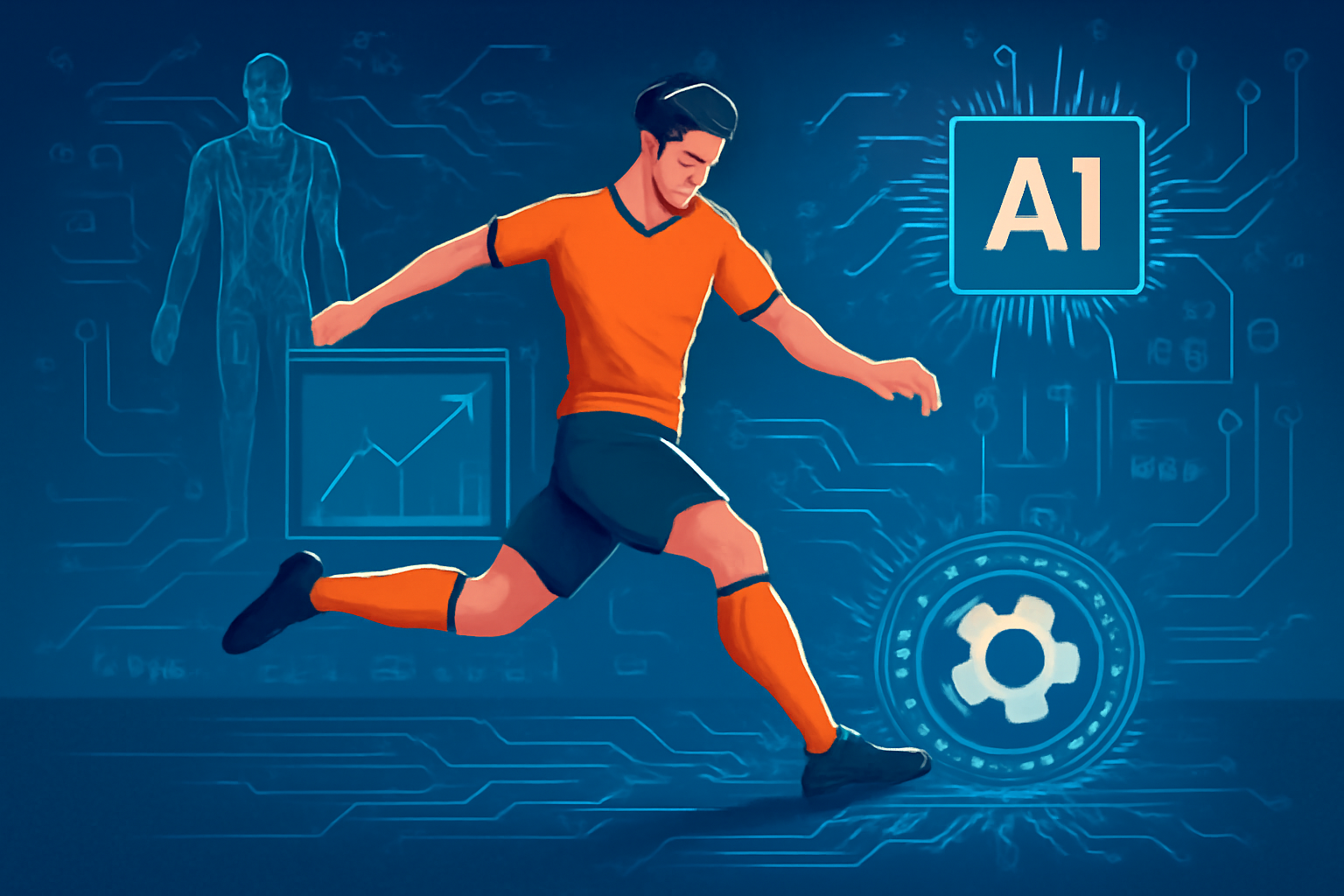
Modern Sports updated the way organizations develop strategies for contemporary sports. Now, machine learning models can analyze player statistics, film, and even real-time tracking data, yielding analysis that goes far beyond the capacity of human analysts. A Harvard study examined more than 800 million SportVU data points from NBA games to determine an “expected possession value” for each play. Actions taken by a player were evaluated based on all events occurring during the possession in a manner that assists with the evaluation of decision-making and player effectiveness.
In soccer, teams utilize expected goals (xG) models to determine the likelihood of scoring from any given shot, providing objective input into offensive and defensive strategies. In American football, teams utilize computer simulations to create plays and enhance formations. Even in hockey, AI models compile player shifts and puck movement tracking statistics to get the most probable scoring opportunity.
Less wealthy clubs can utilize rudimentary AI tools to evaluate video to monitor player development. The reality of data-driven coaching means that strategies and tactics can be based on actual data rather than intuition.
“Machine learning provides a degree of thorough analysis that was not previously possible.”
Modern Sports Injury Prevention and Athlete Safety
In modern sport, injury prevention is a priority, and AI is becoming increasingly important. Wearable sensors, smart clothing, and motion tracking cameras are now being used is being used to monitor an athlete’s biomechanics and health markers. They collect information that AI uses to identify when athletes are fatigued, under stress, or experiencing abnormal movement patterns.
One of the foremost examples of this is the NFL’s “Digital Athlete” project in partnership with Amazon Web Services (AWS). It uses machine learning to model and assess each athlete’s observed movement patterns during game and practice transcriptions (. If something happens to the athlete’s metrics for example a soccer forward states to run with less power AI can alert trainers, who can monitor training loads and recommend recovery, or make program adjustments if needed.
High-tech helmets with integrated accelerometers are also being developed in American football to allow for real-time reading of dangerous impacts to the head, to help prevent concussions.
“AI could make use of data from wearables and motion capture systems, as well as historical injury data, to determine injury risk factors.”
Modern Sports Officiating: VAR and Referee Tools
Whether it is currently in play on the field or prior to starting a game, reviewing a decision in sport is critically dependent on technology. A perfect illustration of this is soccer and the use of the Video Assistant Referee system (VAR) that uses high-speed cameras, computer vision, and artificial intelligence to review key moments in matches (red cards, penalties, and offsides). For example, FIFA’s World Cup has twelve tagged cameras tracking players’ movement in real time. They also use a ‘smart’ ball that incorporates a sensor to log its exact position on the field. By using a two-dimensional kinematic model, assessment is made about the position of each player on the video system, and whether they were offside or otherwise. AI ultimately, along with the other data, completes the review and identifies offside infringement within seconds. After this review, the VAR official reviews their key findings prior to making the field referee aware of the result. In fact, FIFA reports that the decision-making accuracy by referees improved from approximately 95% to 99.3% at the 2018 World Cup.
More sports are using similar technologies:
- Hawk-Eye in tennis and cricket can track the ‘flight’ path of the ball to make a line call.
- Goal-line technology in soccer excludes any doubt as to whether the ball was fully cross the line for a goal.
- American football, teams can challenge decisions by using instant replay.
All of this has resulted in greater transparency and clarity within officiating in modern sport, reduced the likelihood of errors and controversies, and ultimately, allowing for more plausibility and integrity to play the game.
Modern Sports and AI: Controversies and Challenges
Although the advantages are evident, AI utilization in modern sport is not without its detractors. Some people claim that video reviews, such as VAR, slow down the game or that overly “scientific” or technical decisions take away the human drama of sport. While VAR had a high rate of accurate decisions, FIFA (Fédération Internationale de Football Association) did concede that the remaining 0.7 per cent of decisions that they make wrong, could still be “bitterly contentious.” Other issues were regarding data privacy—who owns the biometric data obtained from wearables? The question remains how we assure that AI models do not become biased.
Ultimately, human and competitive balance remain principal issues in adoption of AI in modern sport.
The Future of Modern Sports with AI
AI in contemporary sports appears to have a bright future and applications beyond training and officiating will only continue to expand. Teams are now employing AI in the following ways to:
• Optimize their operations, from scheduling to crowd management.
• Enhance fan engagement opportunities with GPS-scheduled highlight reels and delivery of statistics through chatbots.
• Recognize patterns in injuries and missed games and can predict injuries with 96% accuracy. Even some talk about AI camera angles to replace some in-game decision-making processes for referees and developing VR technology that allows fans to virtually “stand on the field” with their favorite players. “AI will have a key role in shaping the future of sports and entertainment experiences
Timeline of AI Breakthroughs in Modern Sports
- 2002 Hawk-Eye first used in tennis
- 2003 “Moneyball” popularizes sabermetrics in baseball
- 2013 SportVU tracking data first introduced to NBA
- 2018 VAR debuts at the FIFA World Cup
- 2021 NFL launches “Digital Athlete” with AWS
- 2025 Projected for use with AI officiated matches in widespread testing phase
Conclusion:
AI technology is reshaping the game like never before, from the front office to the playing field. Teams are more intelligent, athletes are safer, and fans are more engaged than before. While challenges remain such as ethical reasons and barriers to implementation costs, the direction of travel is clear: sports will be a digital, intelligent, and data-driven future. The primary challenge will be how to achieve this innovation without sacrificing the essence of the game.
About The Author